The Art and Science of the Perfect Pint
As a brewery owner or manager in the Greater Toronto Area, you know that crafting exceptional beer is a delicate balance of art and science. You obsess over grain bills, hop profiles, and yeast strains. But what about the unsung hero working tirelessly behind the scenes? We’re talking about your process cooling system. While the brew kettle gets the glory, it’s the precise, consistent temperature control during fermentation and conditioning that truly defines the quality and repeatability of your final product. For modern breweries, this level of control is achieved with a high-performance glycol chiller system.
At Air Flow Mechanical, with over 25 years of serving industrial and commercial clients across the GTA, we’ve seen firsthand how a robust process cooling system can transform a brewery’s operations from good to great. It’s not just a piece of equipment; it’s a strategic asset that protects your batches, your reputation, and your bottom line.
What Exactly is a Glycol Chiller and Why is it Crucial?
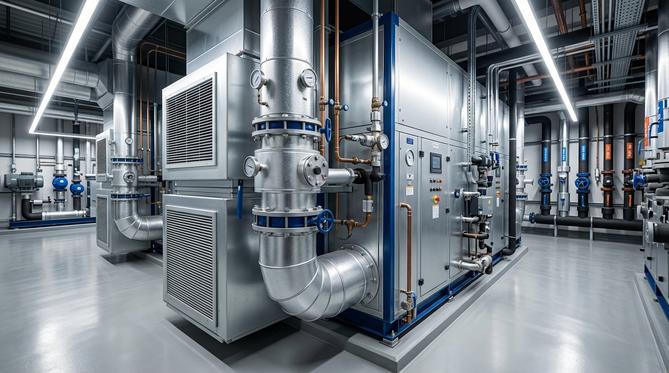
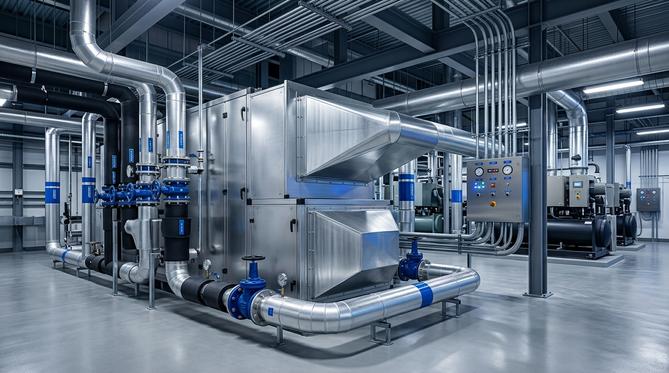
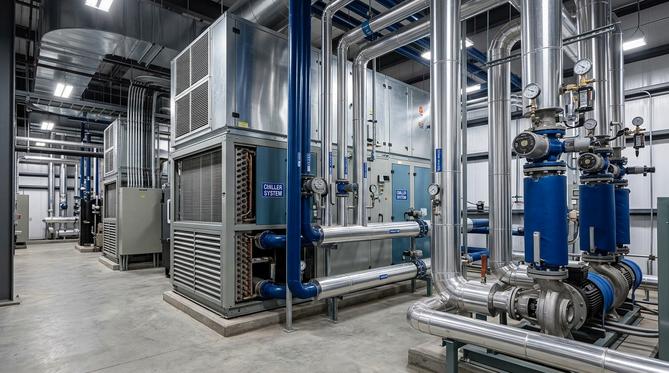
A glycol chiller is the heart of your brewery’s cold side. It’s a specialized refrigeration system that circulates a chilled mixture of food-grade propylene glycol and water through a closed loop of pipes connected to the jackets on your fermenters and brite tanks. This allows you to individually and precisely control the temperature of each vessel.
Why is this so important? Fermentation is an exothermic process, meaning it generates its own heat. Without active cooling, the temperature inside the tank would rise, stressing the yeast. This can lead to undesirable off-flavours, stalled fermentations, and inconsistent results. A glycol system gives you the power to:
- Maintain optimal fermentation temperatures for specific yeast strains, ensuring a clean and predictable flavour profile.
- Effectively “crash” your beer to near-freezing temperatures, causing yeast and proteins to drop out for a clearer, more stable product.
- Hold beer at precise serving temperatures in brite tanks or serving vessels.
Signs Your Brewery’s Cooling System Needs an Expert Eye
Even the best systems can face issues, and in a brewery, downtime is disastrous. A single lost batch can cost thousands. Be on the lookout for early warning signs that your process cooling system requires professional attention:
- Inconsistent Fermentation: Are batches of the same recipe turning out differently? Your temperature control may be fluctuating.
- Long Crash Times: If it’s taking longer than usual to bring a tank down to temperature, your system is struggling.
- Chiller Running Constantly: A properly sized unit should cycle. If it’s running non-stop, it’s either undersized or inefficient, driving up your energy costs.
- Visible Ice or Leaks: Any ice buildup on the unit or refrigerant lines, or visible fluid leaks, are immediate red flags.
- Spiking Hydro Bills: An unexpected increase in energy consumption is often the first sign of a system losing efficiency.
Choosing the Right Process Cooling Partner in the GTA
Your brewery’s success depends on the reliability of its core equipment. You need more than a general HVAC technician; you need a partner with proven experience in industrial process cooling. Air Flow Mechanical specializes in the unique demands of the food and beverage industry, including breweries across the GTA. We understand the critical nature of temperature control in your process. Our certified technicians have deep expertise in designing, installing, and maintaining systems from industry-leading brands like RefPlus, Carrier, Trane, and York.
We believe in proactive solutions. A customized preventive maintenance plan is the single best investment you can make to prevent catastrophic failures, ensure energy efficiency, and extend the life of your chiller. Don’t let an equipment failure ruin your next brew. Protect your passion and your investment by partnering with the experts.
Ready to ensure your cooling system is as reliable as your recipes? Contact Air Flow Mechanical today for a comprehensive assessment of your brewery’s process cooling needs.